
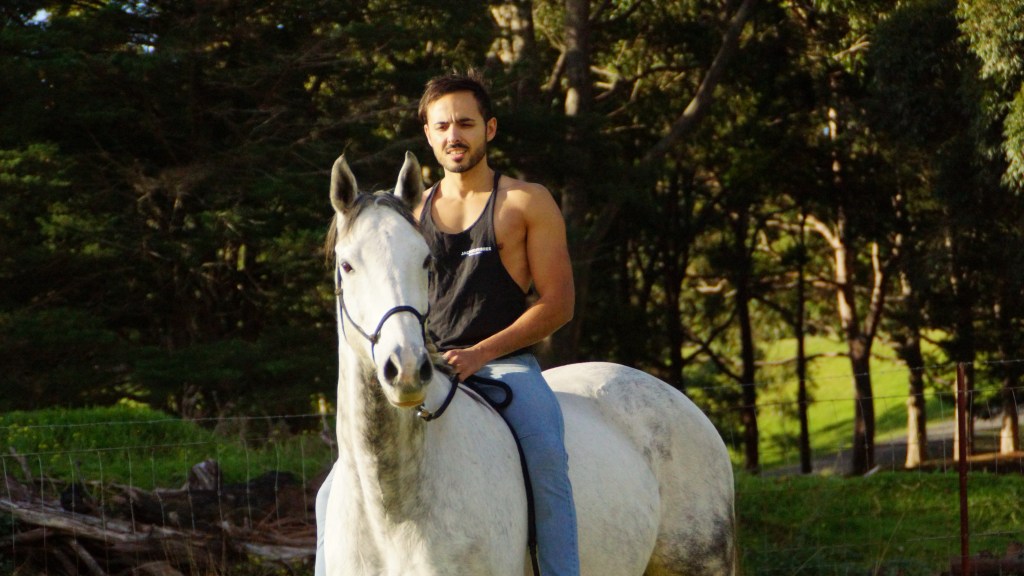
My Story
I wasn’t born into a “horsey” family. In fact, I didn’t own my first horse until later in life. But I always loved horses and spent my childhood watching horse-riding classics like The Black Stallion. I dreamed of one day galloping across the beach like the boy in the film, feeling wild, free and completely connected to such an amazing animal. That was what I thought it would be like before I owned a horse, and it’s the reason I bought one as soon as I got married and moved out of home.
As you might expect, the fairy tale came crashing down pretty fast when I bought my first horse, a fiery chestnut Thoroughbred. I was a 26-year-old corporate banker with no riding experience other than the occasional trail ride, so the horsey people at my boarding stable just rolled their eyes when they saw me coming. I’m pretty thick-skinned, so I didn’t take offence and worked hard to build my skills, taking lessons, attending clinics, watching countless YouTube videos and taking advice from experienced horse people around the barn.
Whilst I did get better over time, it always felt like a real grind and never quite lived up to how I thought it would. But my love for horses never waned, so I kept trying and, to a degree, became consumed by learning to be a better horseman. I often felt frustrated because it was hard to find good information I could actually apply. Everything felt complicated, confusing and often contradictory to what I was learning simply by spending time with horses and understanding what they wanted.
The more I looked around at other horse owners, the more I realised I wasn’t alone. Even so-called “horsey people” who had been born into it seemed to be frustrated more often than not.
All of this came to a head a couple of years later when I found myself rescuing an unbroken, 17hh, seven-year-old Clydie cross from a deceased estate. To cut a long story short, I managed to halter-break him just enough to get him onto a truck and off to an experienced sport horse trainer recommended by a friend.
I had already built a strong bond with him, so I was excited to ride him after he had gone through the starting process. Unfortunately, after a couple of weeks, the trainer called to say he was a bucker and that I should sell him at market because he wasn’t suitable for me.
Whilst I valued the trainer’s opinion, I really liked the horse, so I found another trainer from Europe who specialised in starting heavy horses. Unfortunately, he came back with the same report. Thinking third time would be a charm, I sent him to a Western trainer, but he was unable to make any progress either.
Eventually, on the advice of my darling wife, who had more confidence in me than I did, I decided to take time off work and start him myself. Fast-forward a few weeks, and I was riding him around bareback in a halter. Since then, I’ve started all my colts in the exact same way.
What changed?
Well, to put it simply, I took the time to really understand, connect and communicate with my horse. Like humans, horses have different personalities and desire different things, but for the most part, they seek comfort, pleasure and play.
There are many sub-desires within each of these, and that’s part of the horsemanship strategy I share in my clinics. Once I figured out the ways I could deliver what my horse wanted, I started weaving them into everything I did with him.
This made me the most important thing in his life, so much so that I didn’t need a halter anymore because he followed me like a puppy dog wherever I went. Through that strong connection, I developed a clear and authentic way of communicating with him, which felt natural and made training a breeze.
It was that experience that led me to start helping other horse owners on the same journey.
How I teach horsemanship?
I don’t believe there’s one method or process that will work for every horse and owner. Each is an individual with different needs, and good horsemanship requires us to adapt our approach accordingly.
I teach horse owners how to better understand their horse, communicate clearly and build genuine connection through practical training. When you understand how to build that level of communication and connection, you’re no longer just training your horse — you’re building a genuine partnership.
And that’s where real change begins.

